
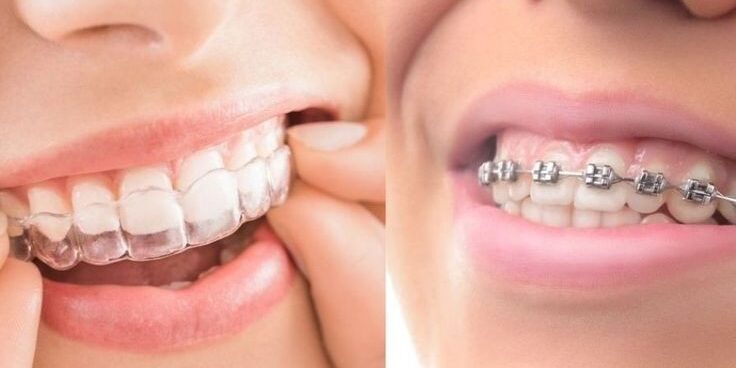
Orthodontic treatments have evolved significantly over the years, offering patients multiple options to achieve a straight and healthy smile. Among the most popular choices today are Invisalign aligners and conventional metal braces. Both are effective in correcting misaligned teeth and bite problems, but they differ in terms of appearance, comfort, treatment approach, and suitability.
Understanding the advantages and disadvantages of Invisalign versus traditional braces can help you make an informed decision based on your dental needs, lifestyle, and expectations.
What Is Invisalign?
Invisalign is a modern orthodontic treatment that uses a series of custom-made, clear plastic aligners to gradually move teeth into proper alignment. These aligners are removable and nearly invisible, making them a preferred choice for adults and teenagers who want a discreet orthodontic solution.
Each set of aligners is worn for a specific period and replaced as the teeth shift, following a digitally planned treatment sequence.
What Are Conventional Braces?
Conventional braces consist of metal brackets bonded to each tooth and connected by wires and elastic bands. Over time, controlled pressure applied by the braces moves the teeth into the desired position. Traditional braces have been used for decades and are highly effective, especially for complex orthodontic conditions involving severe crowding or bite issues.
Advantages of Invisalign
Discreet Appearance
One of the biggest advantages of Invisalign is its nearly invisible appearance. The clear aligners blend naturally with the teeth, making them ideal for patients who are concerned about aesthetics during treatment.
Removable and Convenient
Invisalign aligners can be removed while eating, brushing, and flossing. This allows patients to maintain good oral hygiene and enjoy their regular diet without major restrictions.
Enhanced Comfort
The aligners are made of smooth plastic and do not have sharp edges or wires. This reduces irritation to the gums and cheeks, offering a more comfortable experience compared to traditional braces.
Fewer Dental Visits
Invisalign treatment usually requires fewer adjustment visits compared to braces. This is beneficial for patients with busy schedules.
Predictable Treatment Planning
Advanced digital scanning and treatment planning allow patients to visualize the expected results even before the treatment begins, making outcomes more predictable.
Disadvantages of Invisalign
Requires Patient Discipline
Invisalign aligners must be worn for 20 to 22 hours per day to be effective. Failure to wear them consistently can delay results or reduce effectiveness.
Not Suitable for All Cases
Severe orthodontic problems, complex bite issues, or major jaw misalignments may not respond as effectively to Invisalign and may require conventional braces.
Risk of Misplacement
Since Invisalign aligners are removable, there is a risk of losing or damaging them, especially if proper care is not taken.
Higher Cost in Some Cases
Depending on the complexity of treatment, Invisalign can be more expensive than traditional braces.
Advantages of Conventional Braces
Effective for Complex Cases
Traditional braces are highly effective for treating severe crowding, rotated teeth, complex bite problems, and jaw alignment issues.
No Compliance Concerns
Because braces are fixed to the teeth, treatment continues around the clock without relying on patient discipline.
Customization Options
Modern braces offer choices such as ceramic brackets and colored elastic bands, allowing some level of personalization.
Proven Long-Term Results
Conventional braces have a long track record of successful orthodontic outcomes and remain the gold standard for comprehensive correction.
Disadvantages of Conventional Braces
Visible Appearance
Metal brackets and wires are noticeable, which may affect confidence for some patients, especially adults.
Dietary Restrictions
Patients must avoid hard, sticky, and chewy foods that can damage braces or loosen brackets.
Oral Hygiene Challenges
Cleaning around brackets and wires can be difficult, increasing the risk of plaque buildup if oral hygiene is not maintained properly.
Initial Discomfort and Irritation
Brackets and wires may cause irritation to the cheeks and lips, particularly after adjustments.
Invisalign vs Conventional Braces: How to Choose?
The choice between Invisalign and conventional braces depends on several factors, including aesthetic preference, severity of dental misalignment, lifestyle, daily routine, budget, and commitment to treatment.
Invisalign is often suitable for adults and teenagers seeking a discreet and convenient option for mild to moderate alignment issues. Conventional braces are typically recommended for complex orthodontic cases that require precise and continuous force.
Importance of Professional Orthodontic Evaluation
Selecting the right orthodontic treatment requires a thorough evaluation by a qualified dentist or orthodontist. Factors such as tooth alignment, jaw structure, bite function, and gum health are carefully assessed before recommending Invisalign or traditional braces.
Professional guidance ensures that the chosen treatment delivers safe, effective, and long-lasting results.
Conclusion
Both Invisalign and conventional braces are effective solutions for achieving a straight and healthy smile. Invisalign offers advantages such as comfort, convenience, and discretion, while traditional braces remain highly effective for complex orthodontic corrections. Understanding the pros and cons of each option can help you choose the treatment that best suits your dental needs and lifestyle.
For expert orthodontic consultation and advanced treatment options, Craft32 Dental Care & Implant Center, Baner, Pune, provides comprehensive orthodontic and dental services using modern technology to help patients achieve confident, lifelong smiles.